AC Installation Guide for Chandler, AZ: Everything Homeowners Need to Know
If you're facing another Chandler summer with an aging or failing AC system, the prospect of replacement can feel overwhelming. Between equipment options, contractor selection, financing, and timing, there's a lot to navigate. This guide gives you everything you need to approach AC installation with confidence — from recognizing when replacement makes sense to understanding exactly what happens on installation day.
Viking Heating & Air Conditioning has installed hundreds of AC systems across Chandler, Gilbert, Mesa, Phoenix, Scottsdale, Queen Creek, and Tempe since 2016. We've built our reputation on honest assessments, transparent pricing, and quality workmanship — no high-pressure sales tactics, no hidden fees.
When AC Replacement Makes Sense
Warning Signs Your System Is Failing
- Age: Systems over 10-12 years old in Arizona's extreme climate are approaching end of life
- Rising energy bills: A noticeable increase without usage changes indicates declining efficiency
- Frequent repairs: Repeated repair calls that keep adding up over the past 12 months
- Uneven cooling: Hot spots or rooms that won't cool suggest capacity loss
- Loud or unusual operation: Grinding, rattling, or constant cycling
- R-22 refrigerant: Systems using R-22 face exponentially rising service costs
The Arizona Factor
AC systems in Chandler and the Phoenix Valley work harder and wear faster than systems in moderate climates. Where a national-average system lasts 15-20 years, Arizona systems typically last 10-15 years due to:
- 2,500-3,500+ annual operating hours (vs. 1,000-1,500 nationally)
- Extreme temperature stress (115°F+ during peak summer)
- Constant dust exposure degrading components
- UV radiation deteriorating outdoor unit components
Choosing the Right AC System
Proper Sizing Is Non-Negotiable
In Arizona's extreme heat, system sizing affects everything:
- Undersized: Runs constantly on hot days, can't maintain comfortable temperatures, wears out prematurely
- Oversized: Short-cycles (turns on/off frequently), fails to dehumidify during monsoon season, wastes energy
- Properly sized: Runs efficient cycles, maintains consistent temperatures, controls humidity effectively
Professional Manual J load calculations account for your home's square footage, insulation, windows, orientation, shade, and local climate data. Viking HVAC performs these calculations on every installation — never guessing or using "rule of thumb" sizing.
System Types
| Type | Best For |
|---|---|
| Central split system | Most Chandler homes with existing ductwork |
| Heat pump system | Homes wanting efficient heating + cooling |
| Ductless mini-split | Room additions, garage conversions, problem areas |
| Packaged unit | Homes with rooftop or pad-mount configurations |
Costs vary by system size, efficiency tier, and installation complexity — Viking HVAC provides a detailed written estimate specific to your home before any work begins.
Efficiency Ratings That Matter
All new residential systems use R-454B refrigerant (as of 2025). Efficiency is measured by SEER2:
- SEER2 14-15: Minimum efficiency, lowest upfront cost
- SEER2 16-17: Good efficiency, strong value for Arizona — our most recommended range
- SEER2 18-20+: Premium efficiency, maximum energy savings
Higher-SEER2 systems cost more upfront but use less energy to deliver the same cooling, so the right tier depends on how long you plan to stay in the home and how the extra upfront cost compares to the ongoing energy savings for your household.
Features Worth Considering
- Variable-speed compressor — Adjusts output to match demand rather than running full-blast or off. Provides steadier temperatures and better humidity control
- Smart thermostat compatibility — Enables remote control, learning schedules, and energy optimization
- Two-stage operation — Runs at lower capacity for mild days, full capacity for extreme heat
- Advanced filtration — Higher-capacity filter slots for improved air quality
What to Expect on Installation Day
Before the Crew Arrives
- Clear paths to indoor and outdoor unit locations
- Secure pets in a separate area
- Remove items near the indoor air handler
- Ensure electrical panel is accessible
- Plan for 6-10 hours without cooling
The Installation Process
- Old system removal — Refrigerant recovery (EPA required), disconnection, and careful extraction
- Site preparation — Pad/mounting prep, electrical assessment, any ductwork modifications
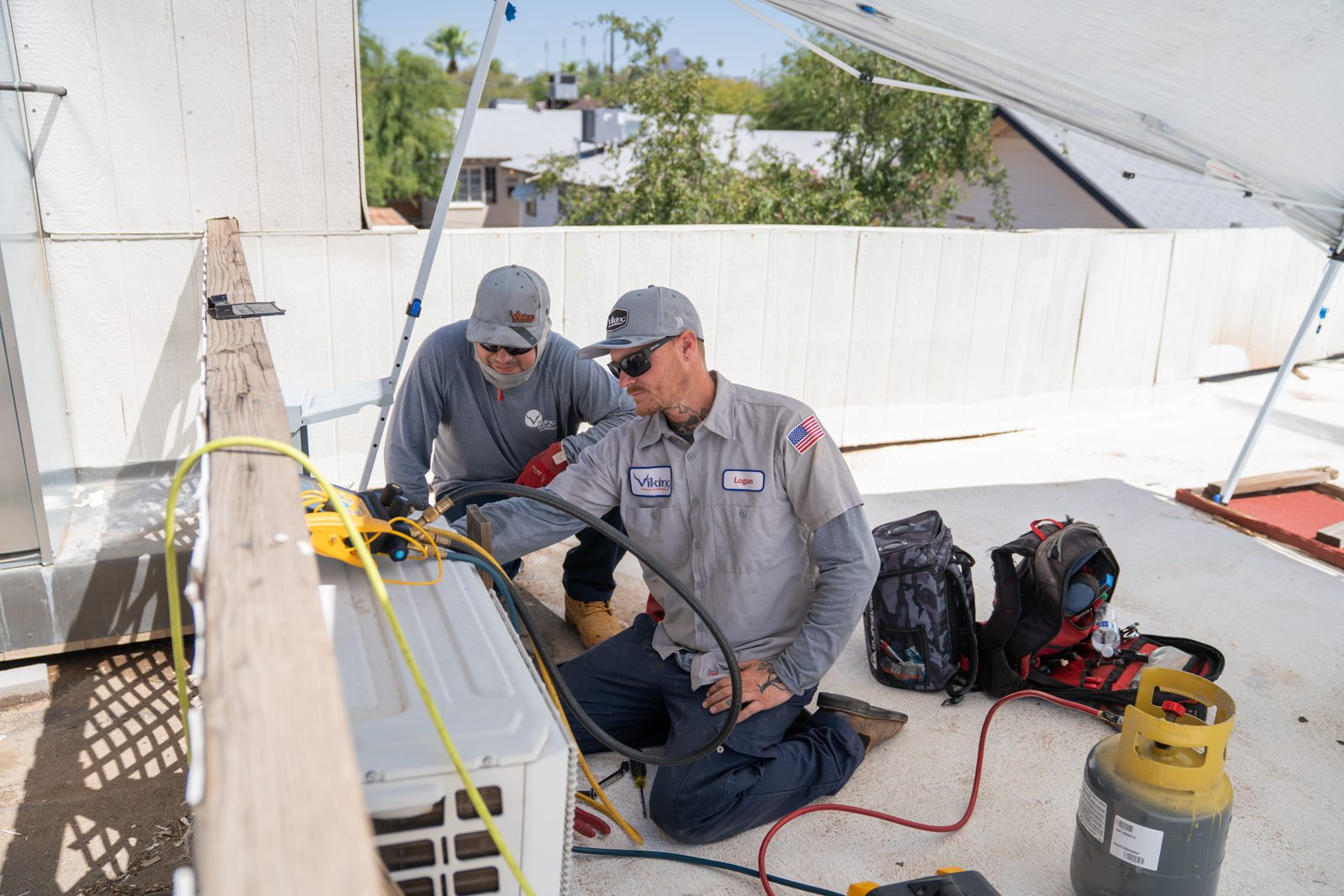
- New equipment installation — Outdoor condenser placement, indoor unit mounting, refrigerant line connection
- Electrical work — Proper wiring, disconnect installation, breaker verification
- Refrigerant charging — Precise measurement for optimal performance in Arizona heat
- System testing — Full operation check in cooling mode, airflow verification at all vents
- Thermostat setup — Programming, Wi-Fi connection, schedule optimization
- Walkthrough — Explanation of your new system's operation, maintenance requirements, and warranty
After Installation
- First 30 days: Monitor performance, note any concerns, allow the system to "break in"
- Energy bills: Expect noticeable reduction within the first billing cycle
- Maintenance: Schedule your first maintenance visit at 6 months to verify optimal operation
Costs, Savings, and Financing
What Drives Installation Cost
Installation cost depends on system tier (budget, mid-range, or premium efficiency), equipment size, and job complexity. Costs include equipment, labor, standard installation, permits, and startup — additional costs may apply for electrical upgrades, ductwork modifications, or complex installations. Viking HVAC provides a detailed written estimate for your specific home before any work begins, so you know the full cost up front.
Cost-Saving Programs
Utility and manufacturer programs that can offset HVAC upgrade costs come and go, and eligibility rules change over time. Ask Viking HVAC during your consultation about what's currently available for your situation.
Financing
Financing options are available for qualifying customers. Visit viking-hvac.com/financing for current terms.
How to Choose the Right Contractor
Green Flags
- Licensed, bonded, and insured in Arizona
- Performs Manual J load calculations (not "rules of thumb")
- Provides written estimates with detailed equipment specifications
- Offers multiple equipment options at different price points
- Pulls permits and schedules inspections
- Has verifiable reviews and references
- Explains the process and answers questions patiently
Red Flags to Avoid
- Quotes without visiting your home or performing load calculations
- Extreme low-ball pricing (often means cutting corners on installation quality)
- High-pressure "today only" tactics
- Reluctance to provide written estimates or references
- Suggesting you skip permits or inspections
- Recommending the most expensive system without explaining why
- No mention of warranty terms or post-installation support
Frequently Asked Questions
How much does AC installation cost in Chandler, AZ?
AC installation costs vary depending on system type, efficiency rating, and installation complexity. Equipment, labor, permits, and standard installation are all factors. Viking HVAC provides detailed written estimates so you know exactly what you're paying for before work begins.
How long does AC installation take?
Standard installations are completed in a single day, typically 6-10 hours. Complex projects requiring electrical upgrades, ductwork modifications, or multi-zone systems may take longer. Viking HVAC provides accurate timeline estimates during your consultation.
When is the best time to install a new AC in Chandler?
Spring (March-April) is optimal — moderate temperatures, best contractor availability, and time to test before extreme summer heat. Fall (October-November) is the second-best option. Avoid summer if possible due to higher costs, limited scheduling, and the stress of being without cooling during extreme heat.
What size AC do I need for my Chandler home?
Proper sizing requires a professional Manual J load calculation that considers your home's specific characteristics — not just square footage. A 2,000 sq ft Chandler home might need a 3-4 ton system, but the actual requirement depends on insulation, windows, orientation, and construction quality. Viking HVAC performs detailed calculations on every installation.
Will a new AC system really lower my energy bills?
Yes. Upgrading from an older, lower-efficiency system to a modern SEER2-rated system typically lowers cooling costs, and the improvement is most noticeable when replacing systems older than 12 years.
Does Viking HVAC offer warranties on AC installations?
Yes. All installations include Viking HVAC's workmanship warranty plus manufacturer equipment warranties (typically 5-10 years on major components). We also offer maintenance programs that extend equipment life and provide priority service if issues arise.
HVAC Services Near You
Frequently Asked Questions
How much does AC installation cost in Chandler, AZ?
AC installation costs vary depending on system type, efficiency rating, and installation complexity. Equipment, labor, permits, and standard installation are all factors. Viking HVAC provides detailed written estimates so you know exactly what you're paying for before work begins.
How long does AC installation take?
Standard installations are completed in a single day, typically 6-10 hours. Complex projects requiring electrical upgrades, ductwork modifications, or multi-zone systems may take longer. Viking HVAC provides accurate timeline estimates during your consultation.
When is the best time to install a new AC in Chandler?
Spring (March-April) is optimal — moderate temperatures, best contractor availability, and time to test before extreme summer heat. Fall (October-November) is the second-best option. Avoid summer if possible due to higher costs, limited scheduling, and the stress of being without cooling during extreme heat.
What size AC do I need for my Chandler home?
Proper sizing requires a professional Manual J load calculation that considers your home's specific characteristics — not just square footage. A 2,000 sq ft Chandler home might need a 3-4 ton system, but the actual requirement depends on insulation, windows, orientation, and construction quality. Viking HVAC performs detailed calculations on every installation.
Will a new AC system really lower my energy bills?
Yes. Upgrading from an older, lower-efficiency system to a modern SEER2-rated system typically lowers cooling costs, and the improvement is most noticeable when replacing systems older than 12 years.
Does Viking HVAC offer warranties on AC installations?
Yes. All installations include Viking HVAC's workmanship warranty plus manufacturer equipment warranties (typically 5-10 years on major components). We also offer maintenance programs that extend equipment life and provide priority service if issues arise.
Need HVAC Service in Chandler?
Contact Viking Heating and Air Conditioning today for hvac installation services in Chandler, AZ.