Commercial HVAC Maintenance and Service: What Phoenix Metro Valley Businesses Need to Know

Commercial HVAC Maintenance and Service: What Phoenix Metro Valley Businesses Need to Know
Published by Viking Heating & Air Conditioning | Licensed Commercial HVAC Contractor serving Phoenix, Chandler, Gilbert, Mesa, Scottsdale, Queen Creek, and Tempe since 2016
When a commercial HVAC system fails in Arizona's climate, the consequences show up fast. Preschools, medical offices, retail stores, restaurants, and senior living communities all depend on reliable heating and cooling for the safety and comfort of the people inside them. Understanding what commercial HVAC maintenance and service actually involves helps facility managers and business owners across the Phoenix Metro Valley keep their systems running and know what to expect when something goes wrong.
Arizona's cooling season runs for most of the year, which puts more strain on commercial equipment here than in milder climates. That extra run time, combined with dust and heat exposure, makes a consistent maintenance plan and a clear understanding of emergency service one of the more important operational decisions a business can make.
What Commercial HVAC Maintenance Actually Covers
Commercial systems are more complex than residential units, and a thorough maintenance visit reflects that. A comprehensive commercial maintenance visit typically includes:
- Electrical System Inspection: Checking wiring, connections, and electrical components for wear, looseness, or early signs of failure. Arizona's temperature swings can loosen connections over time, so this step matters more here than in milder climates.
- Mechanical Component Testing: Evaluating motors, fans, belts, and compressor operation to catch parts that are wearing out before they fail outright.
- Performance Measurements: Taking amp readings on major components to spot equipment that's working harder than it should, which is often an early warning sign of a bigger problem.
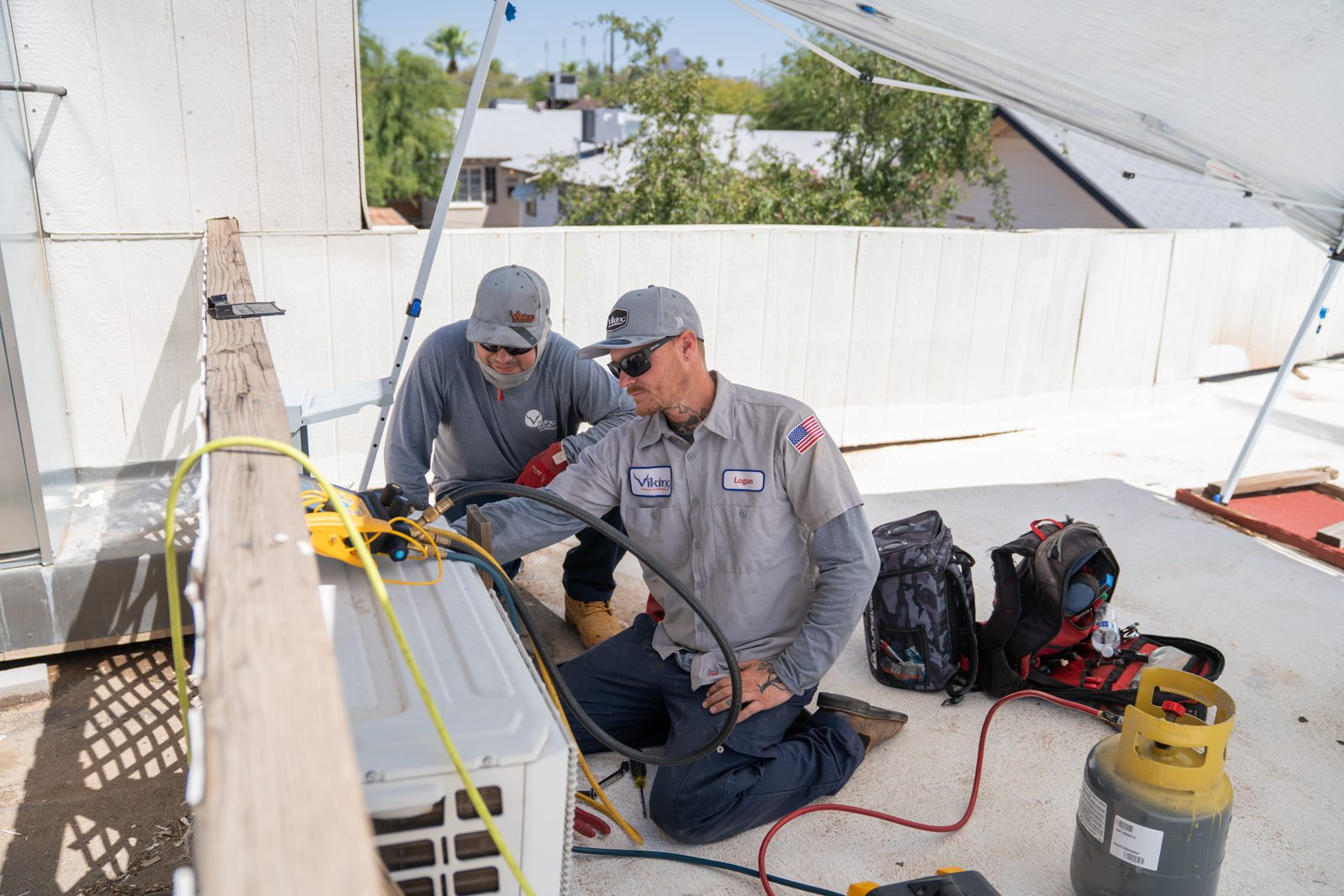
- Refrigerant System Checks: Verifying refrigerant levels and system pressures, and checking for leaks throughout the cooling circuit.
- Coil Cleaning: Removing dust and debris buildup from evaporator and condenser coils, which is a bigger factor in Arizona than in most other regions given how much airborne dust our systems pull in.
- Filter Replacement: Swapping filters on a schedule suited to the facility's usage and Arizona's dusty environment.
- Ductwork Review: Checking for leaks, blockages, or damage that can create hot or cold spots and waste energy.
For commercial facilities, maintenance also means documentation. Facility managers typically want records of what was inspected, what was serviced, and what to watch going forward, especially for buildings with multiple systems or regulatory requirements around indoor air quality.
Recognizing the Warning Signs of a Failing System
Commercial HVAC systems usually give some warning before they fail completely. Knowing what to watch for can be the difference between a scheduled repair and an emergency call. Common warning signs include:
- Unusual Noises: Grinding, squealing, or banging sounds often point to mechanical components that are failing or misaligned.
- Inconsistent Temperature Control: Hot or cold spots throughout a facility can indicate ductwork issues, refrigerant problems, or equipment that's undersized or oversized for the space.
- Rising Energy Costs: An unexplained jump in utility bills often means the system is losing efficiency due to worn components or a developing problem.
- Frequent Cycling: A system that turns on and off more often than it should may have an electrical issue, a refrigerant problem, or improper sizing.
- Poor Indoor Air Quality: Increased dust, humidity, or odors can point to filtration or ventilation issues that need professional attention.
Training staff to recognize these signs and report them early gives a facility more options. A problem caught during a routine check can often be repaired on a manageable timeline. The same problem ignored until the system stops running becomes an emergency.
When Repair Makes Sense and When Replacement Does
Deciding whether to repair or replace a commercial HVAC system depends on several factors working together: the age of the equipment, the extent of the current problem, how the cost of repair compares to the cost of replacement, and how critical uninterrupted operation is to the business.
Older systems nearing the end of their expected service life are more likely to have repeat failures, even after a successful repair. When a major component like a compressor fails on an aging system, it's worth weighing whether that repair buys much runway before the next failure. For facilities that can't tolerate future downtime, such as healthcare settings or senior living communities, that calculus often favors replacement even when a repair is technically possible.
There's no substitute for an actual inspection here. The right call depends on the specific system, its history, and the facility's tolerance for risk, not a rule of thumb. A qualified technician should walk through the tradeoffs directly rather than defaulting to the most expensive option.
What Emergency Commercial HVAC Service Looks Like
Some HVAC failures can't wait for a scheduled maintenance visit. Complete system failure, refrigerant leaks in food service environments, or air quality issues in healthcare settings all qualify as true emergencies that create health, safety, or operational risk if they aren't addressed quickly.
An effective emergency response for a commercial facility generally includes:
- Rapid Diagnosis: A technician who can quickly identify the root cause rather than guessing at parts to replace.
- Clear Communication: A straightforward explanation of what failed, the repair-versus-replace tradeoffs, and what happens next, so facility management can make an informed decision without delay.
- Access to Parts and Equipment: Established supplier relationships that shorten the time between diagnosis and a working system, whether that means a repair part or a full replacement unit.
- Coordinated Scheduling: Installation or repair work scheduled to minimize disruption to the facility's operations, including off-hours work when that's an option.
- Temporary Measures When Needed: For facilities where occupants can't safely go without climate control, temporary cooling or heating solutions to bridge the gap until permanent repairs are complete.
Viking Heating & Air Conditioning provides 24/7 emergency service throughout the Phoenix Metro Valley, because HVAC failures don't wait for convenient business hours.
Building a Preventive Maintenance Program for Arizona Commercial Facilities
Arizona's climate makes preventive maintenance less optional than it might be elsewhere. A maintenance program built for desert operation typically includes more frequent filter changes than milder climates require, regular coil cleaning to manage dust accumulation, annual refrigerant system checks, and periodic inspection of electrical connections that can loosen under repeated heat cycling.
The specific schedule depends on the facility: a restaurant kitchen, a medical office, and a warehouse all put different demands on their HVAC systems, and a maintenance plan should reflect that rather than applying a single generic schedule to every building.
Businesses that stay ahead of maintenance generally see fewer emergency calls, more predictable operating costs, and longer equipment life. It's also worth noting that permitting and inspection requirements apply to commercial HVAC replacement work throughout the Phoenix Metro Valley. A contractor familiar with local building departments in Chandler, Gilbert, Mesa, Phoenix, Scottsdale, Queen Creek, and Tempe can keep that process from adding unnecessary delay to a replacement project.
Frequently Asked Questions About Commercial HVAC Maintenance and Service in Phoenix Metro Valley
Q: How often should a commercial HVAC system be serviced in Arizona?
A: Most commercial facilities in the Phoenix Metro Valley benefit from maintenance visits on a quarterly schedule, though the right frequency depends on system usage, facility type, and how much dust the location is exposed to. Restaurants, medical facilities, and other high-demand environments may need more frequent attention than a typical office space.
Q: What constitutes a commercial HVAC emergency versus a standard service call?
A: Commercial HVAC emergencies typically involve complete system failure, situations that create health or safety risks, or problems that significantly impact business operations. Examples include total cooling loss during extreme heat, heating failure in winter months, refrigerant leaks in food service facilities, or air quality issues in healthcare settings. Standard service calls involve routine maintenance, minor repairs, or system optimization that doesn't create immediate operational or safety concerns. When in doubt, call us—we'd rather assess a situation and find it's non-emergency than have you wait when immediate action is needed.
Q: How do you determine whether to repair or replace a failed commercial HVAC system?
A: Our decision-making process considers several factors including the age of the equipment, extent of the damage, how repair costs compare to replacement, and long-term reliability needs. We also consider how critical the facility is—for businesses that cannot afford future failures, replacement may be recommended even when repairs are technically possible. We always walk clients through the tradeoffs directly and let them make the final decision based on their specific needs.
Q: What steps can Phoenix area businesses take to prevent commercial HVAC emergencies?
A: Preventive maintenance is the most effective strategy for avoiding emergencies. We recommend regular maintenance visits that include filter replacement, coil cleaning, refrigerant level checks, and electrical connection inspection. Arizona's climate demands more frequent attention than other regions due to dust accumulation and extreme operating conditions. Training staff to recognize warning signs like unusual noises or temperature inconsistencies also allows for earlier intervention before a small problem becomes an emergency.
Q: Do you handle permitting and inspections for commercial HVAC replacements?
A: Yes, we handle all necessary permits and coordinate required inspections for commercial HVAC work throughout Phoenix Metro Valley. Our familiarity with local building departments in Chandler, Gilbert, Mesa, Phoenix, Scottsdale, Queen Creek, and Tempe helps us navigate the approval process without adding unnecessary delay to a project.
Q: How do you minimize disruption to business operations during commercial HVAC work?
A: We coordinate closely with facility managers to schedule work during off-hours when possible, provide temporary cooling or heating solutions when needed, and work efficiently to minimize downtime. For critical facilities like healthcare or senior living, we may provide portable units to maintain safe conditions during a repair or replacement. Clear communication about timeline expectations and coordination with other building systems helps ensure a facility can get back to normal operation as quickly as possible.
Choose Viking HVAC for Your Commercial HVAC Needs
Whether you need routine maintenance, a repair, or emergency service, Viking Heating & Air Conditioning brings the technical expertise and responsiveness that Phoenix Metro Valley businesses depend on. Our family-owned and operated company has built its reputation on treating every client's HVAC needs with the urgency and care they deserve.
From preschools and medical offices to retail stores and senior living communities, businesses across Chandler, Gilbert, Mesa, Phoenix, Scottsdale, Queen Creek, and Tempe trust Viking HVAC to keep their facilities comfortable, safe, and running.
Contact us today at (480) 689-5167 to discuss a preventive maintenance program for your facility, or visit www.viking-hvac.com to learn more about our commercial HVAC services. For emergency assistance, call (480) 689-5167 any time—our 24/7 emergency response team is backed by our 100% customer satisfaction guarantee.
HVAC Services Near You
Need HVAC Service in Chandler?
Contact Viking Heating and Air Conditioning today for commercial hvac services in Chandler, AZ.