Extreme Heat Preparation: AC Tune-Up Before 107°F Week in Chandler

The National Weather Service Phoenix has issued an Extreme Heat Watch for the Greater Phoenix area, including Chandler, with temperatures expected to soar to 107°F by Friday, March 21st. As your trusted local HVAC partner, Viking Heating and Air Conditioning wants to ensure your air conditioning system is prepared for this intense heat wave that will test cooling systems across the East Valley.
Immediate Action Summary for Chandler Homeowners An Extreme Heat Watch is active for Chandler March 16-22, 2026, with temperatures reaching 107°F. Viking Heating and Air Conditioning recommends scheduling immediate AC maintenance, replacing filters, and checking system performance before peak heat arrives. Professional tune-ups prevent costly emergency repairs when your cooling system faces maximum stress during Arizona's dangerous temperatures.
Understanding Arizona's Extreme Heat Challenge
Arizona's desert climate presents unique challenges for air conditioning systems, and this week's forecast represents the kind of extreme conditions that separate well-maintained systems from those heading toward failure. When temperatures climb above 105°F, your AC unit operates under maximum stress for extended periods, often running continuously for 12-16 hours daily.
The temperature progression forecast shows a steady climb from Monday's comfortable 91°F to Friday's dangerous 107°F. This isn't just uncomfortable weather – it's potentially life-threatening heat that makes a functioning air conditioning system absolutely critical for safety and comfort.
During extreme heat events, cooling costs rise sharply for average-sized homes, making system efficiency more important than ever. Well-maintained systems run substantially more efficiently than neglected units, translating to real savings during peak cooling periods.
Key Takeaway: Extreme heat puts maximum stress on AC systems. Professional maintenance before heat waves prevents expensive emergency repairs and ensures your family's safety during dangerous temperatures.
Pre-Heat Wave AC System Inspection Checklist
Before temperatures soar, homeowners should conduct a thorough inspection of their cooling system. Start with your outdoor condenser unit – clear all vegetation, debris, and obstructions from around the unit, maintaining at least two feet of clearance on all sides. Check for bent fins, which reduce airflow and efficiency.
Indoor preparation includes replacing air filters, which should be changed every 60-90 days in Arizona's dusty conditions. During extreme heat preparation, install a fresh, high-quality filter to ensure optimal airflow when your system works hardest.
Inspect your thermostat settings and consider upgrading to a smart thermostat if you haven't already. Smart thermostats can meaningfully reduce energy use through advanced scheduling and learning algorithms, particularly valuable during expensive peak cooling months.
Check all vents and returns for obstructions, ensuring furniture, curtains, or other items aren't blocking airflow. Poor airflow forces your system to work harder and can lead to frozen coils or compressor damage during extreme heat.
Professional air conditioning maintenance includes refrigerant level checks, electrical connection inspection, and component testing that homeowners cannot safely perform themselves.
Professional Maintenance: Your Best Defense Against Heat Wave Failures
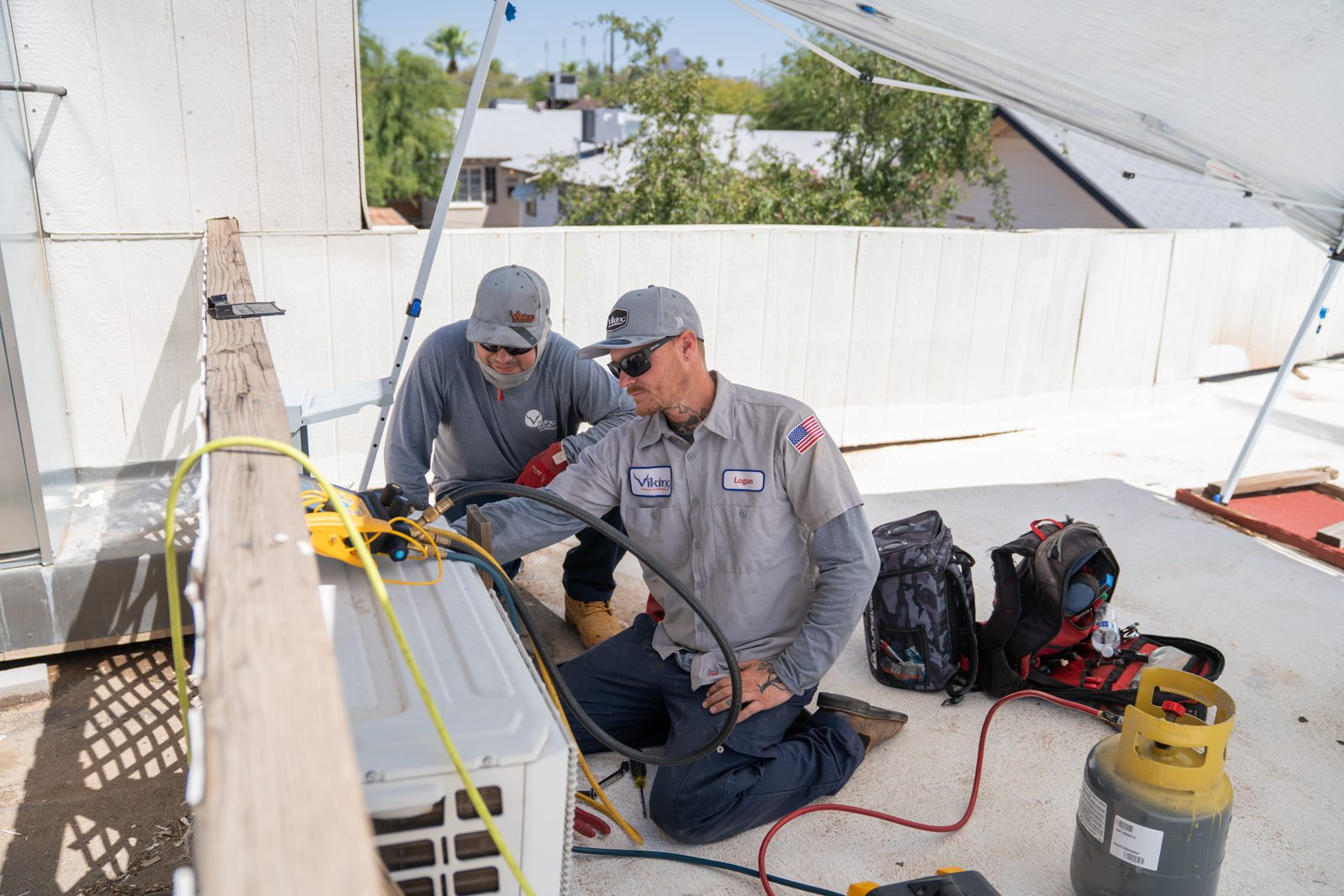
Professional HVAC maintenance becomes critically important before extreme weather events. During a comprehensive tune-up, certified technicians inspect electrical connections, test refrigerant levels, clean condenser coils, and identify potential failure points before they cause system breakdowns.
Refrigerant levels require particular attention in Arizona's extreme heat. Low refrigerant forces your system to work harder, increases energy consumption, and can cause compressor failure during peak demand periods. Only licensed professionals should handle refrigerant testing and charging.
Electrical connections loosen over time, especially in Arizona's temperature extremes. Loose connections cause system inefficiency, increased energy consumption, and potential fire hazards. Professional maintenance includes tightening all electrical connections and testing system amperage under load conditions.
Condenser coil cleaning removes built-up dirt and debris that acts as insulation, preventing efficient heat transfer. Dirty coils can meaningfully reduce system efficiency, forcing your AC to run longer cycles and increasing the risk of breakdown during extreme heat.
Our preventative maintenance programs include priority scheduling, ensuring your system receives professional attention before extreme weather events threaten the Phoenix area.
Key Takeaway: Professional maintenance identifies and corrects problems before they cause expensive failures during extreme heat. Investment in maintenance prevents emergency repair costs and ensures reliable cooling when you need it most.
Energy Efficiency Strategies for Extreme Heat Survival
During 107°F weather, energy efficiency becomes crucial for both cost control and system longevity. Set your thermostat to 78-80°F when home and 85°F when away – avoid drastic temperature adjustments that force your system to work harder than necessary.
Utilize ceiling fans to create air movement, allowing comfortable temperatures at higher thermostat settings. Fans use minimal electricity compared to air conditioning and can make 80°F feel like 76°F through wind chill effect.
Close blinds and curtains during peak sun hours to reduce solar heat gain. South and west-facing windows contribute significantly to indoor heat load, forcing your AC to work harder. Consider upgrading to energy-efficient window treatments or tinting.
The Department of Energy notes that proper insulation and air sealing help reduce cooling costs. During extreme heat, every degree of temperature infiltration increases system workload and energy consumption.
Time-of-use rate structures from local utility providers make energy efficiency even more critical. Peak rates during afternoon hours can significantly raise electricity costs, making efficient system operation essential for reasonable utility bills.
Consider upgrading to a high-efficiency system if your current unit is over 12 years old. Newer, higher-SEER systems run more efficiently than older units. The efficiency improvement becomes most valuable during extreme heat operation.
Warning Signs Your AC Won't Survive the Heat Wave
Several warning signs indicate your air conditioning system may fail during extreme heat conditions. Reduced airflow from vents suggests filter blockages, ductwork problems, or failing blower components that will struggle under continuous operation demands.
Warm air from supply vents indicates refrigerant leaks, compressor problems, or electrical issues that require immediate professional attention. These problems worsen rapidly under extreme heat stress.
Unusual noises including grinding, squealing, or rattling sounds suggest mechanical problems that can cause complete system failure during peak demand periods. Don't ignore these warning signs hoping they'll resolve themselves.
Ice formation on indoor coils or refrigerant lines indicates airflow problems or refrigerant issues. Ice formation during extreme heat often signals impending system failure requiring emergency repair.
Frequent system cycling or inability to maintain desired temperatures suggests your system is undersized, inefficient, or experiencing mechanical problems. Systems struggling before extreme heat will likely fail completely when temperatures peak.
High energy bills without corresponding comfort improvements indicate system inefficiency that will become expensive during peak cooling season. Address efficiency problems before they become emergency repairs.
Professional emergency HVAC repair services become critically important during extreme heat, but prevention through maintenance remains the most cost-effective approach.
Key Takeaway: Warning signs before extreme heat indicate potential system failure. Address problems proactively through professional service to avoid emergency repairs during dangerous temperatures.
System Sizing and Capacity Considerations
Arizona homes require significant cooling capacity due to extreme temperatures and high solar heat gain. The general rule suggests 1 ton of cooling capacity per 400-500 square feet, but Arizona conditions often require higher capacity calculations.
Undersized systems run continuously during extreme heat, leading to premature wear, high energy bills, and inability to maintain comfortable temperatures. Systems struggling to cool homes during moderate weather will fail completely during 107°F conditions.
Oversized systems cycle too frequently, failing to remove humidity and creating uncomfortable conditions. Proper sizing requires professional load calculations considering insulation, window placement, orientation, and local climate conditions.
Home additions, renovations, or improved insulation can change cooling requirements, making previously adequate systems insufficient for current needs. Professional load calculations determine whether your current system can handle extreme heat demands.
Ductwork sizing must match system capacity for optimal performance. Undersized ducts restrict airflow, reducing efficiency and system capacity during peak demand periods.
If your current system cannot maintain 78°F during moderate heat, consider HVAC installation of a properly sized, high-efficiency replacement before extreme heat arrives.
The Financial Cost of Emergency Repairs vs. Preventive Maintenance
Emergency AC repairs during extreme heat events cost significantly more than preventive maintenance. Parts availability becomes limited, labor rates increase, and diagnostic time expands when technicians work in dangerous conditions.
Summer cooling costs rise noticeably during peak season for average homes with older, inefficient systems, and emergency repairs typically cost significantly more than routine, scheduled maintenance.
System replacement during extreme heat emergencies limits equipment options and increases installation costs. Planning replacements during moderate weather provides better equipment selection and scheduling flexibility.
The Environmental Protection Agency notes that regular maintenance extends system life and reduces energy consumption. These savings become most significant during extreme heat operation.
Insurance claims for AC-related property damage increase during heat waves when systems fail and cause secondary problems. Preventive maintenance reduces failure risk and associated property damage claims.
Budgeting ahead for major repairs or replacements before emergency situations arise makes the process easier to manage. Emergency repairs often require immediate payment, while planned improvements allow for better financial planning.
Key Takeaway: Emergency repairs during extreme heat cost significantly more than preventive maintenance. Plan system service and upgrades before dangerous temperatures arrive to save money and ensure reliable cooling.
Smart Technology Solutions for Heat Wave Survival
Smart thermostats provide significant advantages during extreme heat events through advanced scheduling, learning algorithms, and remote monitoring capabilities. These devices can automatically adjust temperatures based on occupancy and utility rate structures.
Modern smart thermostats learn your schedule and preferences, automatically adjusting temperatures to minimize energy consumption while maintaining comfort. Remote monitoring allows you to verify system operation and adjust settings from anywhere.
Wi-Fi enabled systems send alerts for maintenance needs, filter changes, and potential problems before they cause system failures. Early warning capabilities become critically important during extreme heat when rapid response prevents expensive repairs.
Some smart thermostats integrate with utility demand response programs, automatically adjusting temperatures during peak rate periods while maintaining acceptable comfort levels.
Smart home integration allows coordination between thermostats, ceiling fans, and window coverings to optimize cooling efficiency. Automated systems respond faster than manual adjustments to changing conditions.
Professional thermostat installation ensures proper configuration and integration with your existing system for optimal performance during extreme weather.
When to Consider System Replacement Before Heat Season
AC systems in Arizona typically last 12-15 years with proper maintenance, potentially extending to 18+ years with excellent care. Systems approaching this age range should be evaluated for replacement before extreme heat season.
Frequent repairs, declining efficiency, and inability to maintain comfortable temperatures indicate system replacement may be more cost-effective than continued repairs. Older systems become unreliable during extreme heat when you need them most.
Refrigerant types present another consideration for replacement timing. Older systems using R-22 refrigerant face increasing service costs as this refrigerant phases out of production. Replacement with modern, environmentally-friendly refrigerants provides long-term cost advantages.
Energy efficiency improvements in modern systems provide significant operational savings during Arizona's extended cooling season. Higher-SEER systems run substantially more efficiently than older, lower-SEER units.
Savings programs for high-efficiency system replacements change frequently, and details vary year to year. Rather than relying on figures here, see our Arizona AC savings programs guide for current, verified information, and ask Viking HVAC what applies at the time of your installation.
Professional consultation includes load calculations, efficiency analysis, and cost comparisons to determine optimal replacement timing. Our repair or replace guide provides detailed decision-making criteria for homeowners.
Serving Chandler & the Phoenix East Valley
- Air Conditioning in Downtown Chandler
- Air Conditioning in Ocotillo
- Air Conditioning in Sun Lakes
- Air Conditioning in Andersen Springs
- Air Conditioning in Cooper Commons
- Air Conditioning in Clemente Ranch
- Air Conditioning in Chandler Heights
- Air Conditioning in Riggs Ranch
- Air Conditioning in Circle G
- Air Conditioning in Fulton Ranch
- Air Conditioning in Carino Estates
- Air Conditioning in Springfield Lakes
- Air Conditioning in South Chandler
- Air Conditioning in West Chandler
- Air Conditioning in North Chandler
Don't wait until your air conditioning system fails during 107°F weather to discover problems that could have been prevented. Viking Heating and Air Conditioning provides comprehensive pre-season maintenance, emergency repairs, and system replacements to keep Chandler families safe and comfortable during Arizona's extreme heat. As your local, family-owned HVAC company serving the Greater Phoenix area since 2016, we understand the unique challenges Arizona weather presents to cooling systems. Contact us today at (480) 689-5167 to schedule your pre-heat wave AC service and ensure your system is ready for the challenging temperatures ahead. Our licensed, bonded, and insured technicians are ready to serve as the bridge between you and comfort, no matter what Arizona weather brings.
HVAC Services Near You
Frequently Asked Questions
How can I prepare my air conditioning system for extreme heat in Chandler?
Schedule professional maintenance, change air filters, clear outdoor unit debris, check thermostat settings, inspect ductwork for leaks, and ensure proper insulation. Professional tune-ups before extreme heat prevent costly breakdowns.
What temperature should I set my thermostat during 107°F weather in Arizona?
Set your thermostat to 78-80°F when home and 85°F when away. Avoid drastic temperature changes which overwork your system. Use ceiling fans to maintain comfort at higher settings.
How often should I change AC filters during Arizona's extreme heat season?
Change filters every 60-90 days in Arizona due to dust conditions. During extreme heat periods, check monthly as systems run continuously and filters collect debris faster.
What are signs my AC might fail during extreme heat in Chandler?
Warning signs include reduced airflow, warm air from vents, unusual noises, frequent cycling, high energy bills, and ice formation on the unit. Address these issues before temperatures peak.
Should I run my AC continuously during 107°F weather?
Yes, during extreme heat your AC will likely run continuously to maintain indoor temperatures. This is normal and more efficient than constantly starting and stopping the system.
How much does AC repair cost during extreme heat emergencies in Chandler?
Emergency AC repairs during extreme heat typically cost more than routine maintenance because parts availability tightens and technicians are in higher demand. Scheduling preventive maintenance before the heat wave arrives is the most reliable way to avoid a costly emergency repair or premature replacement.
Need HVAC Service in Chandler?
Contact Viking Heating and Air Conditioning today for air conditioning services in Chandler, AZ.